


When you set out to design your dream kitchen, especially in the vibrant UAE market and search for Kitchen cabinets suppliers in Dubai, it’s essential to start with a clear layout plan for your kitchen cabinets. Good layout planning not only ensures efficient use of space but also reinforces flow, storage capacity, aesthetics, and function in your kitchen. The following guide will walk you through how to plan your kitchen cabinet layout effectively, covering some key considerations, steps, and tips to get it right. And remember, when you want an expert partner, SIMORA Kitchen is a leading service provider in Dubai, UAE.
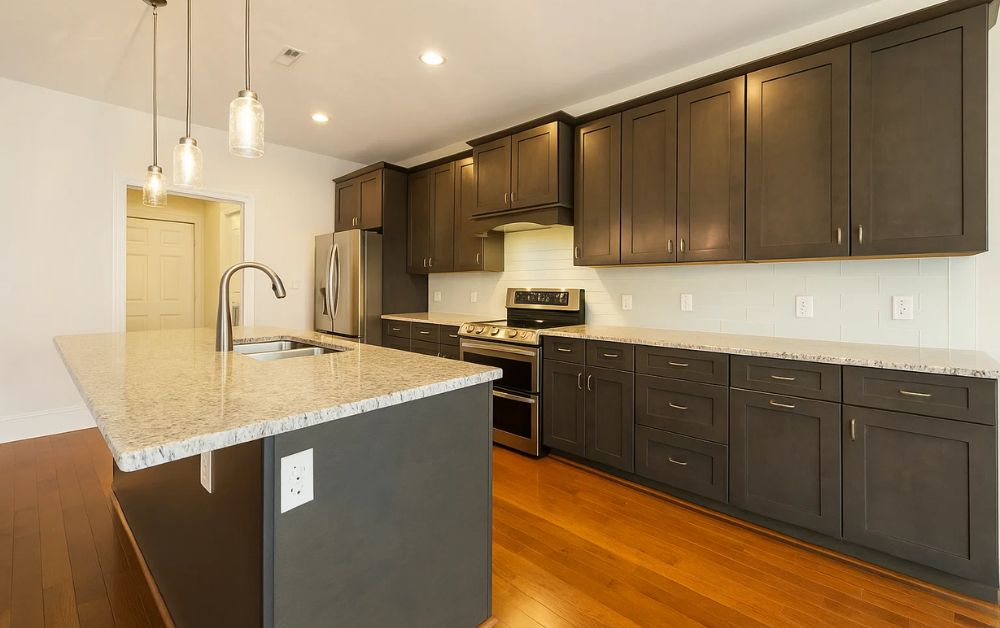

1. Understand Your Space and Workflow
Before you select styles or finishes, you must map out the physical space of your kitchen and how you will move within that space. Measuring well is important: cabinet height, depth, width, clearance space, and appliance zones all play a part in the design.
- Take key wall and corner measurements, including height from the floor to ceiling, lengths of runs, and distances from windows, doors, and appliances.
- Consider the kitchen work triangle: the relationship of sink, cooktop/oven, and refrigerator. Cabinets must support this flow.
- Think about traffic and access: Is there more than one cook? Do you want clear walkways? Do doors or drawers open into each other?
- Note structural impediments, such as columns, beams, HVAC ducts, plumbing, and electrical. They may affect cabinet runs.
- If you are dealing with a modular kitchen layout, which is very common in Dubai, then you will want a provider who offers space management and measurement as a standard. Among the services provided by SIMORA are “space management & measurement.”
2. Define your usage needs and storage requirements
The next thing you need to do is to take into consideration how and how often you cook, who all uses the kitchen, and what you store. Cabinet layout should reflect usage, not just aesthetics.
- List out what you use: cookware, bakeware, small appliances, pantry items, cleaning supplies, etc.
- Which things should be within easy reach, vs. put away? For example: ordinary dishes vs. seasonal dishes, utensils vs. seldom-used appliances
- Think vertical: taller cabinets can house pantry units, while drawers and pull‑out trays may be better for heavy items.
- Consider specialized storage: corner carousels, deep drawers, pull‑out spice racks. These features help maximize otherwise awkward spaces.
- Consider modular kitchen designs that optimize your space for innovative storage solutions and customizations.
3. Choose Your Cabinet Layout & Zones
Once you understand space and storage requirements, you can map out zones and the cabinet runs. Some of the most popular layout types and zoning strategies include:
Typical layout runs:
- Single‑wall: All cabinetry and appliances along one wall—suitable for compact apartments.
- Galley or parallel runs: Two opposing walls of cabinetry for efficient workflows.
- L-shaped: One run along the wall, one along the adjacent wall—flexible and open.
- U‑shaped or island add‑on: Incorporating an island or peninsula for larger spaces.
Zoning your cabinets:
- Cooking zone: The place around the cooktop/oven should contain cabinets and drawers for pots, pans, utensils, hood, and maybe a spice rack.
- Prep zone: Near the cooking zone or the sink; one or more drawers for knives, chopping boards, and mixing appliances.
- Cleaning area: Around the sink; consider a drawer for dishware, over‑sink cabinets, and storage for cleaning supplies under the sink.
- Storage area: pantry cabinetry, tall units, overhead cabinets for dishes/glasses.
- Utility/service zone: For laundry machines, built‑in ovens, microwave, and coffee station, if required.
By following this zoned approach, your kitchen cabinets go beyond being places to store things; they become a system that supports your cooking and lifestyle.
4. Dimensions of Height, Depth, and Function
Dimensions for a cabinet may certainly vary, but there are a few general rules that help to make them functional.
- Base cabinets are about 600 mm deep (approx. 24 in) and about 870‑900 mm high (without countertop). Adjust according to your needs.
- Wall (overhead) cabinets may be 300‑350 mm deep and 600‑900 mm high, depending on ceiling height.
- Tall units like the pantry and oven tower can go full height or to about 2‑3 metres.
- Leave sufficient clearance for openings, drawers require space to pull, and doors to swing.
- Consider toe‑kick space below base cabinets (~100 mm) for ergonomic use.
- In Dubai and other such modern developments, the modular kitchen manufacturer can offer pre‑sized modules with these standards—but always check the dimensions in your specific floor plan.
5. Material, Finish, and Style Choices
- Style matters: the cabinet fronts, hardware, finishes, and colors will determine the style of the entire kitchen.
- Choose between materials: plywood, MDF, solid wood, laminate, acrylic, and aluminum frames, each with its advantages and disadvantages concerning durability, cost, and looks.
- Finishes and colors: light boards contribute to making small kitchens look bigger, while dark shades can add richness but might shrink the space visually.
- Handle or handle‑less: consider ergonomics and style. Soft‑closing hinges and drawers add a premium feel.
- Coordinate your cabinet design with countertop material, backsplash, flooring, and overall kitchen theme.
6. Appliances and Utilities Integration
Your cabinet layout cannot exist in isolation; appliances, plumbing, and electrical must all integrate.
- Provide the proper space for your fridge, oven, microwave, dishwasher, hob, hood, washer/dryer, if in the kitchen.
- Leave space for ventilation, service connections, and do not install tall cabinets in front of utilities.
- Plan for socket positions inside cabinets or on backsplash for small appliances.
- Install task lighting under wall cabinets and inside tall units if necessary.
- Requesting 3D design visuals helps one see how appliances and cabinets interact for a modular kitchen supplier.
7. Accessibility & Ergonomics
A good cabinet layout takes into consideration how people will reach, bend, and store items.
- Items in frequent use should fall between shoulder and knee height, not too high, not too low.
- Drawers for heavy items (pots/pans) rather than deep base cabinets that force bending.
- Wall cabinets over countertops should not be too low to interfere with the workspace or appliances.
- Consider pull-out trays and lazy-Susans for corner cabinets to improve access.
- For homes with children or for elderly family members, you may want to consider lower counters, easily reachable storage, and safety locks.
8. Finalize & Collaborate with a Reliable Supplier
At this point, you have your space measured, zones defined, cabinet modules sized, materials chosen, appliance integration accounted for, and ergonomic considerations made. The time has come to ally with a reputable supplier.
- Choose a manufacturer or installer who provides full service: measurement, design, manufacturing, installation, and after‑sales.
- Insist on a detailed layout drawing in 2D and/or 3D that shows all cabinet modules, dimensions, openings, and appliance zones.
- Confirm lead‑time, installation schedule, artistry guarantee, and available warranty on materials.
- On installation day, verify that everything is according to the plan; levels, clearances, hardware operation, and finish quality.
Also Read – Decluttering Your Kitchen Cabinets: Step-by-Step Guide
9. Review Maintenance & Future‑Proofing
They should be easy to maintain and adapt to future needs once installed.
- Choose surfaces and hardware that resist stains, moisture, and wear, which is essential in high‑use kitchens.
- Modularity simplifies the reconfigurations that will be necessary down the line: swap out modules, replace door fronts, and expand storage as family size grows.
- Consider resale value: well-planned, quality-installed cabinet layouts can add substantial value to a home.

Conclusion
Planning your kitchen cabinet layout is a multi‑stage process: from understanding space and workflow, defining usage and storage needs, selecting cabinet layout and modules, integrating appliances, selecting materials, and working with a trusted provider. For anyone searching for kitchen cabinets Dubai, it’s prudent to choose a supplier who understands the market, provides end‑to‑end service, and delivers high‑quality modular kitchens. In this regard, SIMORA Kitchen stands as a leading service provider in Dubai, UAE—capable of translating your layout plan into a functional and beautiful reality. With careful planning and the right partner, your kitchen cabinet layout won’t just look good—it will work for you for years to come.